
NC & SC Marijuana and CBD Laws: November–December 2026
North Carolina and South Carolina Marijuana & CBD Laws: What Changes in November–December 2026?
Updated November 3, 2026. This article reflects enacted laws and official legislative records available on that date. December developments and election outcomes remain subject to change.
If you buy CBD or hemp products in the Carolinas, the end of 2026 brings an important question: Will your favorite formula still qualify as legal hemp?
Federal changes could reshape product availability, while North Carolina and South Carolina continue debating their own cannabis policies. For shoppers, the details matter: marijuana, hemp-derived THC, and non-intoxicating CBD do not all have the same legal status.
Here is what to know before making your next purchase.
The dates to watch: November 12 and December 11
The major upcoming deadline comes from Washington. Congress changed the federal definition of hemp in Public Law 119-37, enacted November 12, 2025. A later law, Public Law 119-103, delayed most—but not all—of those changes. [1][2]
| Date | What is scheduled | What it means for shoppers |
|---|---|---|
| November 3, 2026 | Midterm Election Day | Results may influence future legislation; voting does not itself rewrite hemp law. |
| November 12, 2026 | Exclusions take effect for hemp-derived cannabinoid products containing cannabinoids the cannabis plant cannot naturally produce | Some products lose their federal hemp exemption earlier than others. |
| December 11, 2026 | Most remaining federal hemp-definition changes take effect unless Congress changes the law again | Total THC, manufacturing methods, and the finished-container limit become critical. |
The Congressional Research Service confirms this split timeline. Treating November 12 as the universal deadline would miss the partial extension. Treating December 11 as an extension for every product would also be incorrect. [3]
What the new federal definition changes
The amended definition replaces the familiar delta-9-only threshold with a total-THC standard that includes THCA. It also excludes certain cannabinoids synthesized or manufactured outside the plant.
For finished hemp-derived cannabinoid products, the law excludes products containing more than 0.4 milligrams per container of combined total THC, including THCA, and other cannabinoids determined to have—or be marketed as having—similar effects. This is a container limit, not a per-serving allowance. [1]
That distinction matters. A bottle may be marketed primarily as CBD yet contain enough trace THC across the entire bottle to exceed the new limit. Based on the statutory thresholds, some full-spectrum CBD formulas could therefore lose their hemp classification even if consumers do not buy them for intoxication.
This is not a blanket prohibition on the CBD molecule. Product composition, manufacturing, and other applicable rules determine the outcome. A “THC-free” label alone is not proof of compliance; batch testing and the applicable detection limits matter.
Nor does qualifying as hemp automatically make every product lawful to sell. FDA separately maintains restrictions on adding CBD or THC to food in interstate commerce and on marketing them as dietary supplements. Those restrictions already exist. [4]
North Carolina: hemp remains distinct from marijuana
North Carolina’s published statute defines hemp using a delta-9 THC concentration of no more than 0.3% on a dry-weight basis and excludes hemp and hemp products from its marijuana definition. Marijuana possession and unauthorized sales remain subject to state controlled-substance law. [5][6]
The state definition and the changing federal definition must be considered separately. A product meeting North Carolina’s wording may still lose its federal hemp exemption after the federal changes take effect.
Several proposals have attracted attention:
- House Bill 328, Regulate Hemp-Derived Consumables: The official record lists its latest action as referral back to the House Rules Committee on July 30, 2026. It should not be described as enacted law.
- Senate Bill 937, Marijuana and Vapor Products Reform: This proposal includes marijuana and hemp reforms, but its official status remains referral to the Senate Appropriations/Base Budget Committee on April 30, 2026. Its proposed changes are not current law. [7][8]
North Carolina also has an Advisory Council on Cannabis studying a regulated adult market. Recommendations and council meetings do not themselves authorize sales. [9]
A separate jurisdictional point is often overlooked: the Eastern Band of Cherokee Indians operates under tribal cannabis rules on its lands. That does not establish statewide legalization or permission to take marijuana elsewhere in North Carolina. [10]
South Carolina: proposed restrictions are not enacted restrictions
South Carolina’s Hemp Farming Act recognizes hemp and finished hemp products, while excluding raw or unprocessed plant material from its definition of a hemp product. Marijuana remains controlled, with limited exceptions; Julian’s Law provides a narrow epilepsy-related CBD framework rather than a general retail medical-marijuana program. [11][12]
For November and December shoppers, two bills deserve careful labeling:
- H.3924, hemp-derived ingestibles: The official history shows the House rejected the conference report on June 25, 2026. Its proposed limits should not be presented as an enacted statewide law.
- S.53, the Compassionate Care Act: The official record still shows referral to Senate Medical Affairs, rather than enactment of a broad medical-cannabis program. [13][14]
Existing guidance also varies by product type. A 2024 attorney general opinion concluded that qualifying nonalcoholic hemp beverages could fall within the hemp exemption, while stressing that individual products require evaluation. Separately, agriculture guidance restricts manufacturing food or drink with added CBD or THC. A controlled-substance exemption and food-law compliance are different questions. [15][16]
For South Carolina customers shopping across the border, a North Carolina receipt does not establish that a product may lawfully be possessed or transported in South Carolina.
Could the midterm elections change the outcome?
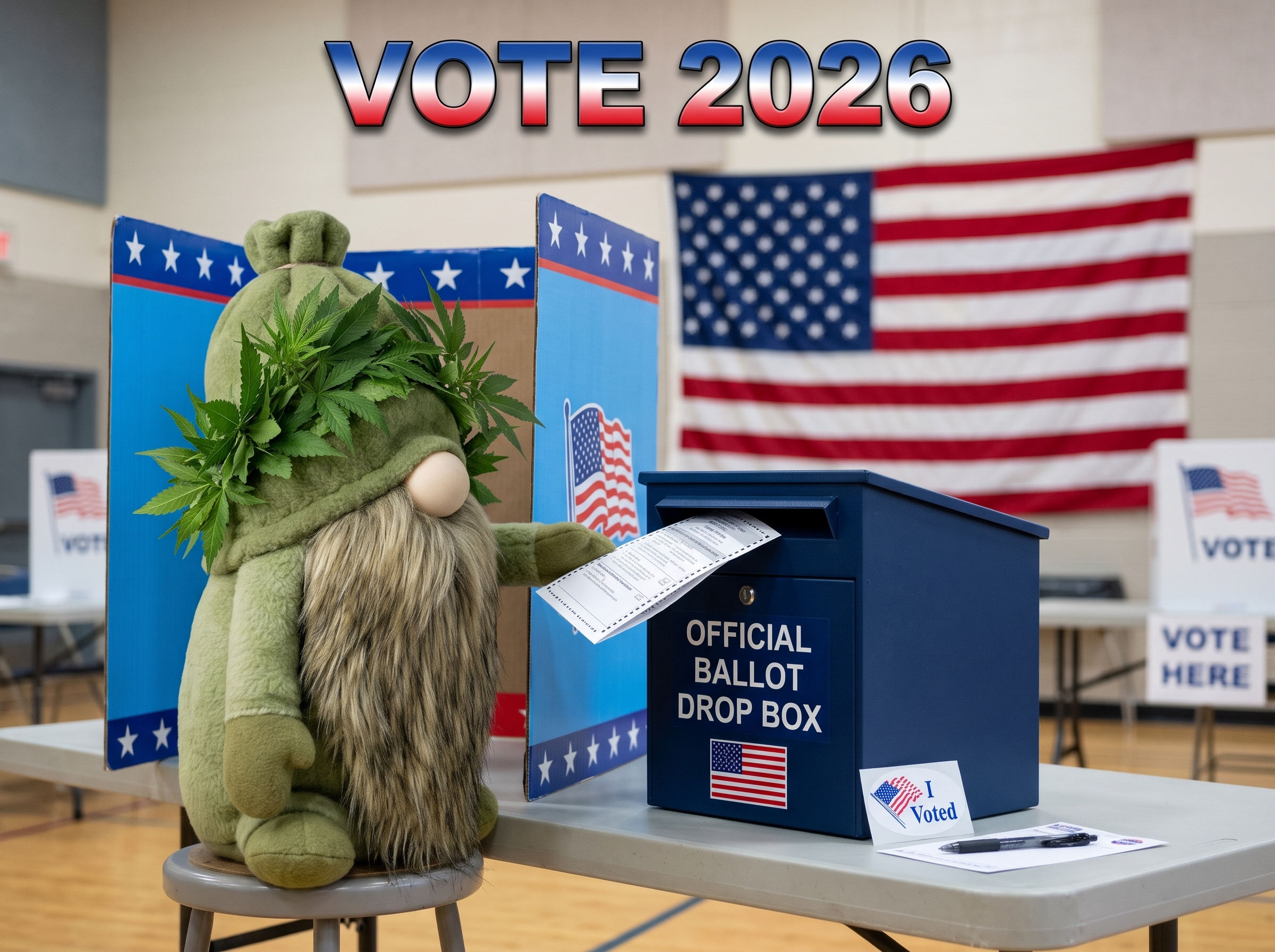
They could influence the next steps, but election results do not automatically postpone a deadline. As this article is dated Election Day, it does not assume winners or a final balance of power. [17]
For the November–December window, the practical possibilities are:
| Possible development | Potential effect |
|---|---|
| The current Congress enacts another extension | Some federal implementation dates could move again. |
| Congress enacts a replacement regulatory framework | Eligible products, testing requirements, or THC limits could change. |
| No further legislation passes | The enacted November 12 and December 11 schedule remains the planning baseline. |
| State election results favor different cannabis policies | State proposals could gain or lose momentum, but actual legislation would still be required. |
These are scenarios, not predictions. Newly elected members of Congress begin their terms in January 2027. Consequently, the immediate federal response before December 11 rests with the sitting Congress and the President. [18]
Party control can affect committee priorities and negotiations, but cannabis votes do not always follow a simple party divide. South Carolina’s split response to H.3924 illustrates why the wording and votes on a particular bill matter more than campaign headlines.
Plan your next purchase with Get Me Some Green
If you rely on a favorite CBD product, now is a useful time to review its ingredients, batch testing, and future availability.
Get Me Some Green—the Canna Corner of Green Leaf Apotecary and Cafe in Matthews—offers free consultations and an online certificate-of-analysis resource. Bring your current label or product name and ask about its cannabinoid content, available batch reports, and non-intoxicating alternatives. [19]
Before stocking up on an eligible CBD item, confirm:
- Whether that specific product is lawful for your location and intended use.
- Its total THC per container and the matching batch test.
- Its expiration date and appropriate storage.
- Whether a compliant alternative would better fit your needs as rules change.
Buying early does not guarantee lawful possession later. The federal amendments reviewed here do not provide a general consumer grandfather exemption for products purchased before their effective dates. Do not treat a stock-up purchase as a way around the new rules. [1][2]
Ready to check your favorites before availability changes? Explore Get Me Some Green, review the COA resources, or call 980-292-1402 to ask about current, lawful non-intoxicating CBD options. Visit 3555-1B Matthews–Mint Hill Road, Matthews, NC 28105, and make your next purchase with clearer information about what comes next. [19]
General information, not legal advice. Product-specific questions may require a qualified attorney. Recheck enacted laws before publishing updates or making purchases near either effective date.
Sources
- Public Law 119-37, Division B, Section 781.
- Public Law 119-103, Section 2019.
- Congressional Research Service, October 28, 2026: Delay in Changes to Hemp Definition.
- FDA: Regulation of Cannabis and Cannabis-Derived Products.
- North Carolina G.S. 90-87.
- North Carolina G.S. 90-95.
- North Carolina H328: official status.
- North Carolina S937: official status.
- NCDHHS: Advisory Council on Cannabis.
- EBCI Cannabis Control Board FAQs.
- South Carolina Hemp Farming Act.
- South Carolina controlled-substance law and Julian’s Law.
- South Carolina H3924: official history.
- South Carolina S53: official history.
- South Carolina Attorney General: September 16, 2024 opinion.
- SC Department of Agriculture: Hemp Products in Human Food quick guide.
- North Carolina State Board of Elections: 2026 election.
- U.S. Constitution, Amendment XX.
- Get Me Some Green: services, contact details, and COAs.
Leave a Reply